
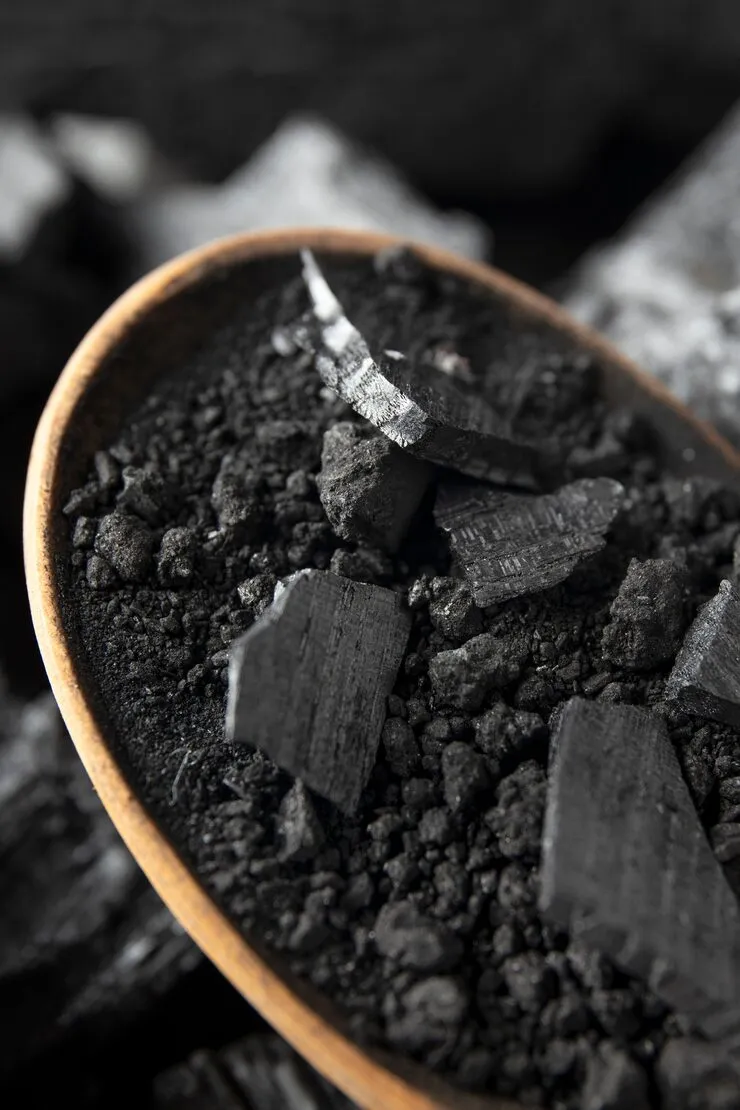
Carbon Black is a chemical compound with the chemical formula CaC2. It is a grayish-white crystalline solid used in producing acetylene gas in various industrial applications, including welding and cutting torches, and as a fuel for lighting and heating.
Raw Material Preparation: We begin by carefully blending lime (calcium oxide) with coke (carbon) in precise proportions to prepare the charge for production.
Carbothermic Reduction: The prepared mixture is then introduced into an electric arc furnace. Here, a high-temperature electric arc facilitates the carbothermic reduction reaction, transforming the mixture into calcium carbide and carbon monoxide.
Reaction: Within the furnace, the following reaction occurs: CaO + 3C → CaC2 + CO, resulting in the formation of calcium carbide and carbon monoxide gas.
Cooling: Post-reaction, the furnace contents are allowed to cool, solidifying the calcium carbide.
Crushing and Screening: The solidified calcium carbide is then crushed and screened to achieve the desired particle sizes.
Packaging: Finally, the processed calcium carbide is packaged for distribution, ready for its various industrial applications.
Enhance user experience with Advanced Tabs, allowing seamless content navigation. Organize information efficiently while keeping the interface clean and interactive. Perfect for FAQs, product details, or multi-section content.
Typically, a compressed acetylene cylinder is designed to feature the materials in the below-given ratios. This combination allows Acetylene to be stored in cylinders at high pressure without the danger of decomposition or detonation. On the safer side, it is recommended to maintain the gas system pressure at a maximum of 15 PSIG during regular use.
Calcium carbide reacts with water to produce acetylene gas and calcium hydroxide: CaC2 + 2H2O → C2H2 + Ca(OH)2
Calcium carbide produces acetylene gas through a chemical reaction with water. Acetylene gas is used as a fuel for welding and cutting torches and as a raw material for making various chemicals.
Calcium carbide is used as a raw material in the production of synthetic rubber, which is used in the manufacturing of tires, belts, hoses, and other industrial products.
Calcium carbide is used as a raw material in the production of PVC, a common plastic used in a variety of products, including pipes, wire insulation, and vinyl flooring.
Acetylene gas produced from calcium carbide is used as a raw material in making chemicals such as vinyl chloride, acrylonitrile, and other specialty chemicals.
Calcium carbide is used in desulfurizing iron and steel, helping to remove impurities and improve the quality of the final product.
Acetylene gas produced from calcium carbide is used as a fuel gas in welding and cutting torches, making high-temperature flames for metalworking applications.
Acetylene gas produced from calcium carbide can be used in gas lamps and lanterns for lighting and heating applications, particularly in areas without electricity.