
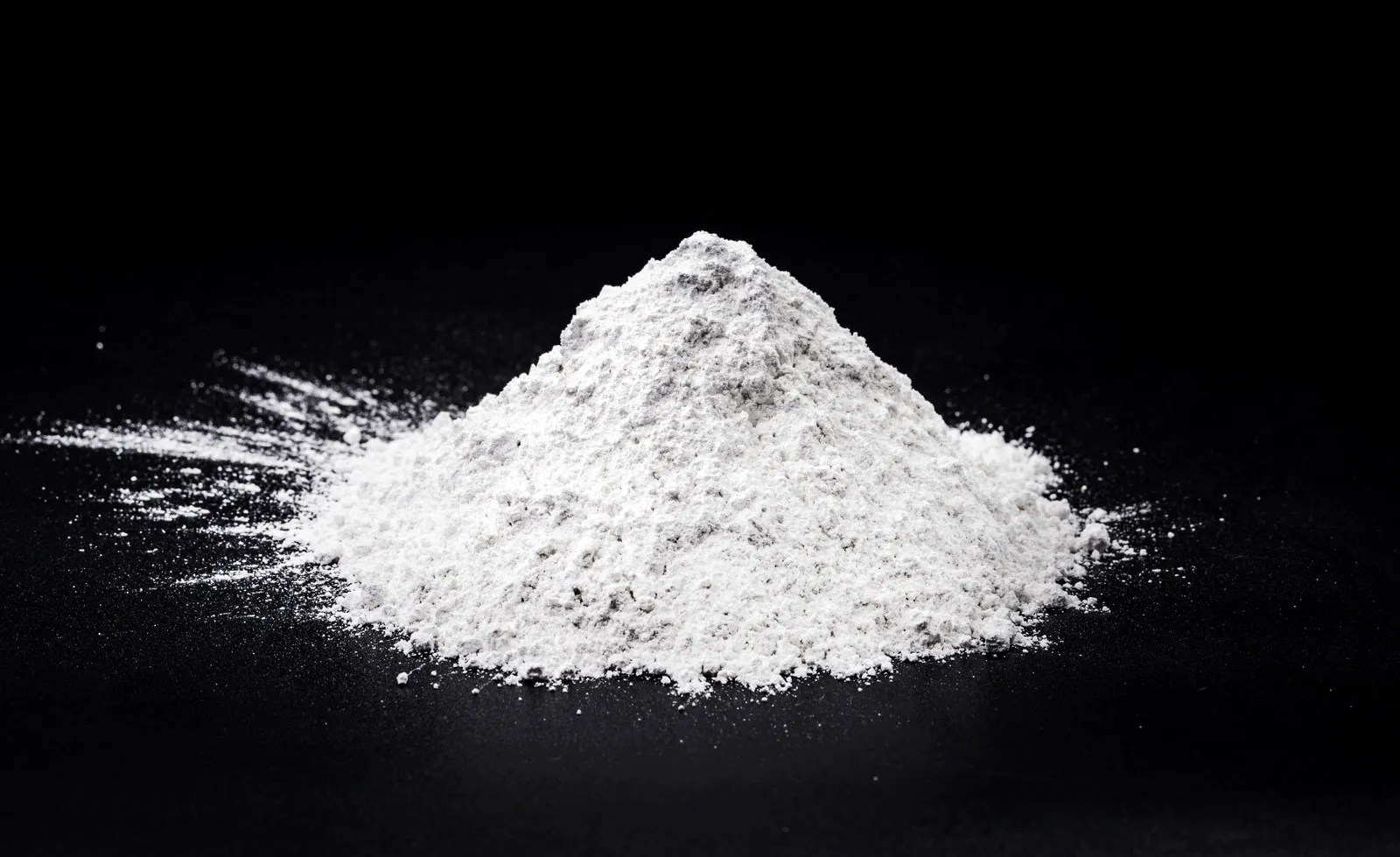
Calcium Oxide (CaO), commonly known as Quicklime, is a highly reactive compound produced with thermal decomposition (calcination) of high-purity limestone (Calcium Carbonate) at temperatures around 1000–1100°C.
It is a white to off-white, odorless, granular or lumpy solid with strong affinity for moisture and carbon dioxide from the atmosphere. Upon contact with water, calcium oxide reacts vigorously to form Calcium Hydroxide (Slaked Lime), releasing significant heat.
With its high reactivity, alkalinity, and purifying properties, Calcium Oxide plays a vital role across metallurgical, environmental, chemical, and construction industries.
| Parameter | Test Result | Unit |
|---|---|---|
|
Physical Appearance |
White or Grayish white solid |
– |
|
CaO% |
96.75 |
% |
|
MgO% |
0.18 |
% |
|
FeO% |
0.01 |
% |
|
SiO2% |
1.36 |
% |
|
Other impurities |
0.75 |
% |
|
Insoluble Acid |
0.95 |
% |
Applied as a soil conditioner, disinfectant, and food-grade additive (E529) in sugar refining and processing operations.
Used as a fluxing agent in steelmaking and non-ferrous metal refining to remove impurities such as silica, sulfur, and phosphorus, improving slag fluidity and metal quality.
Applied in mortar, plaster, whitewash, and soil stabilization. Reacts with water and carbon dioxide to form durable calcium carbonate binding structures. Essential component in autoclaved aerated concrete (AAC).
Serves as a key precursor for producing Calcium Hydroxide, Calcium Carbide, and Calcium Hypochlorite. Also used in pH regulation and neutralization reactions across various chemical processes.
Employed for flue gas desulfurization (FGD), acidic wastewater treatment, sludge stabilization, and waste neutralization, helping industries meet emission and environmental compliance standards.
Used in the causticizing process of kraft pulp mills to regenerate sodium hydroxide and maintain alkalinity balance.
Produced from high-purity limestone with maximum available CaO content, suitable for steelmaking, flue gas treatment, and chemical industries.
Obtained by controlled hydration of quicklime for use in construction, water treatment, and environmental neutralization.

Calcium Oxide is a highly caustic, moisture-reactive substance. Contact with water generates Calcium Hydroxide and heat, which may cause burns. Inhalation of dust can irritate the respiratory system. Avoid exposure to moisture and acids.
Use chemical-resistant gloves, safety goggles, face shields, and approved respirators when handling lime or during operations generating dust. Maintain good ventilation in enclosed areas.
Store in a cool, dry, airtight environment away from water, acids, and incompatible materials. Prevent exposure to air humidity to avoid degradation and caking.
Avoid water contact during cleanup. Sweep or vacuum dry material into sealed containers. For large spills, isolate the area and avoid creating dust. Do not wash with water; neutralize using dry sand or inert absorbent.
Calcium Oxide is regulated as a corrosive material in many jurisdictions; it complies with applicable transport and packaging regulations.
Product documentation (SDS/MSDS) and compliance certificates available upon request. Customers should consult local environmental and occupational safety regulations for handling requirements.
High-quality limestone (CaCO₃) is selected as the primary raw material. The limestone is first crushed and screened to the required size for uniform processing.
The prepared limestone is then fed into a kiln or furnace, where it is heated at high temperature. During this heating process, the limestone undergoes thermal decomposition, releasing carbon dioxide and forming quicklime (calcium oxide).
CaCO3 → CaO + CO2
After calcination, the hot quicklime is cooled carefully to prevent reabsorption of moisture and carbon dioxide from the air.
The cooled quicklime is crushed, screened, and graded into different particle sizes depending on its intended application.
Finally, the finished lime is packed in moisture-resistant bags or supplied in bulk to ensure product quality during storage and transport. It is then ready for distribution to customers in industries such as steel, construction, chemicals, and environmental services.