
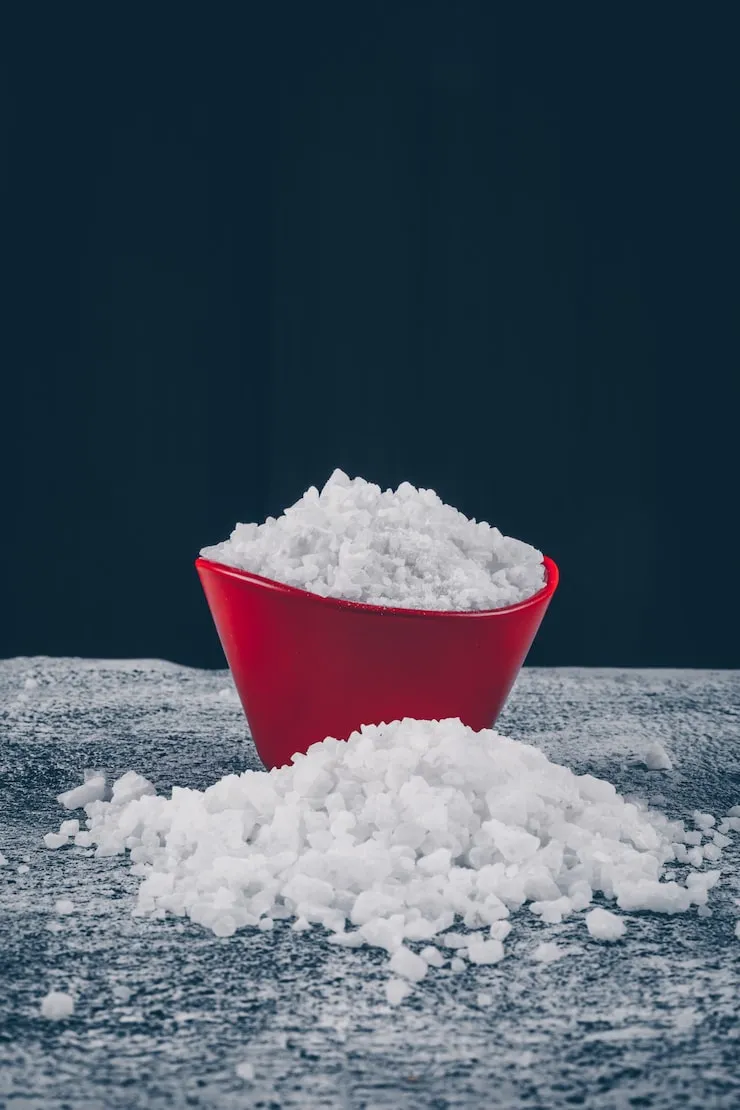
Precipitated Calcium Carbonate (PCC) is a high-purity, synthetic form of calcium carbonate (CaCO₃) produced through a controlled chemical reaction. Unlike ground calcium carbonate, which is derived from natural limestone, PCC is chemically manufactured to achieve uniform particle size, crystal shape, and surface area — making it ideal for high-performance industrial applications.
| Parameter | Test Result | Unit |
|---|---|---|
|
Physical Appearance |
White odorless & tasteless powder |
– |
|
Moisture |
0.14 |
% |
|
Particle Size |
Median Size ≤5.0238
Mean Size ≤ 5.1685 |
μm |
|
Brightness |
95.55, 0.16, 1.11 |
L*a*b |
|
Yellowness index |
1.51 |
– |
|
CaCO3 |
99.34 |
% |
|
MgCO3 |
0.41 |
% |
|
Other impurities |
0.25 |
% |
Primary application area — used as a filler and coating pigment to enhance brightness, opacity, smoothness, and printability of paper and paperboard. PCC helps reduce raw material costs while improving paper quality and performance.
Acts as a functional filler in PVC, polypropylene, polyethylene, and other thermoplastics to improve stiffness, surface finish, impact resistance, and dimensional stability. Its fine particle size allows excellent dispersion and uniformity.
Serves as an extender pigment to improve whiteness, gloss, opacity, and rheology control. PCC enhances paint stability and reduces the need for more expensive primary pigments such as TiO₂.
Improves tensile strength, resilience, and process ability in rubber compounds and sealant formulations. Used in tires, hoses, footwear, and industrial rubber products.
High-purity PCC grades are used as tablet excipients, antacids, calcium supplements, and food additives. Certified food/pharma-grade PCC meets stringent purity and safety standards.
Used in toothpastes, body powders, and cosmetics as a mild abrasive and opacity enhancer with smooth mouthfeel and safe dermal properties.
Applied in flue gas desulfurization, wastewater neutralization, and soil treatment due to its reactivity and controlled particle surface area.
Surface-modified (e.g., stearic acid coating) for improved compatibility with polymers and hydrophobic systems, ideal for plastic and rubber applications.
Produced with submicron particle size for enhanced smoothness, gloss, and performance in high-grade paper, coatings, and specialty polymers.

Calcium Carbonate is a non-toxic, non-flammable, and chemically stable mineral compound. It does not present significant hazards under normal handling conditions. Inhalation of fine dust may cause mild respiratory or eye irritation. Avoid prolonged exposure to airborne dust.
Use standard dust control measures and basic PPE — safety goggles, gloves, and a dust mask or respirator in areas where airborne particles may form.
Store in a dry, cool, and well-ventilated location. Keep bags or containers tightly closed to prevent moisture absorption and dust release. Avoid contact with strong acids, which can produce carbon dioxide gas.
Avoid generating dust. For dry spills, sweep or vacuum material into clean containers for reuse or disposal. If spilled on wet surfaces, clean promptly to prevent slipping hazards. Prevent large quantities from entering drains or waterways.
Calcium Carbonate is not classified as dangerous goods under transport regulations. Handle in accordance with general good industrial practices.
Product documentation (SDS/MSDS) and compliance certificates available on request. Calcium Carbonate complies with REACH, RoHS, and applicable international safety standards for industrial, food, and pharmaceutical grades.
Production begins with high-quality lime (calcium oxide), which is mixed with water to form calcium hydroxide (slaked lime). This mixture serves as the base for producing Precipitated Calcium Carbonate.
Next, carbon dioxide gas (CO₂) is carefully bubbled through the calcium hydroxide slurry. This chemical reaction forms fine particles of calcium carbonate (CaCO₃) and water.
Ca(OH)2+CO2→CaCO3+H2O
The newly formed calcium carbonate is then filtered and washed to remove impurities and ensure high purity and brightness.
The wet product is dried and then classified or milled to achieve the desired particle size and texture according to different industrial applications.
In some cases, a surface coating is applied to improve dispersion and compatibility in end-use products such as plastics, paints, or paper.
Finally, the finished Precipitated Calcium Carbonate is packed in moisture-resistant bags or shipped as a slurry, ready for use in a wide range of industries like paper, plastics, paints, rubber, and pharmaceuticals.